
Eos is a manifestation app, and the one I'm proudest of as a piece of design. We built it under Tortuga Labs, our consumer app studio. The category insight came from real discovery: most manifestation apps help you write down what you want and then leave you alone with it, and manifestation without action doesn't tend to go very far. Eos is built around the opposite idea - it uses AI to help you take small, real steps toward whatever you're working on, so the practice connects to something you actually do.
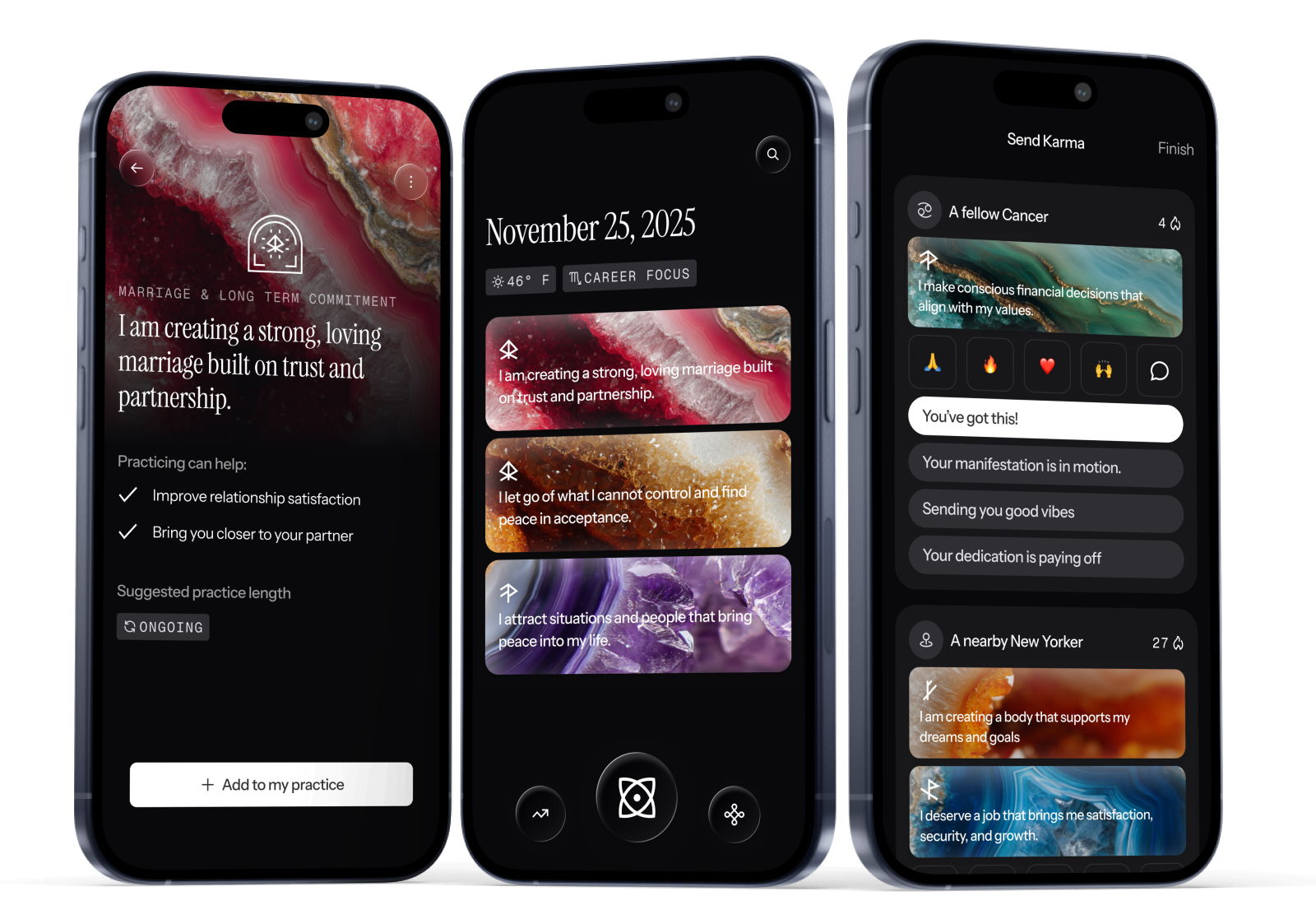
Features
The core of the app is a daily practice we structured as Think, Say, Do. Think is mindset preparation. Say is the affirmation itself, read or spoken with intention. Do is the part the rest of the category skips: you commit to a concrete action tied to what you're working toward, framed as something for later in the day rather than an interruption to the morning.
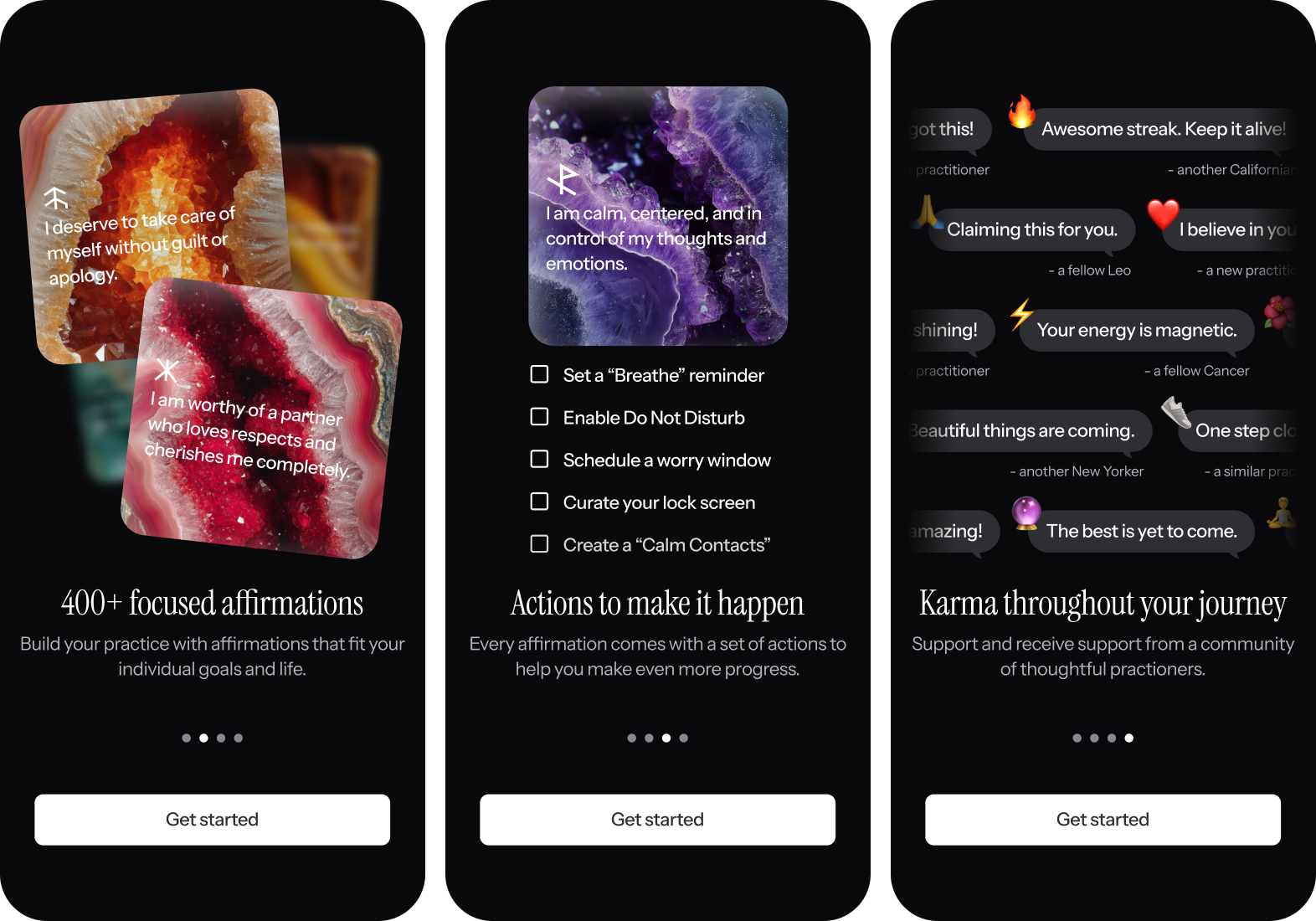
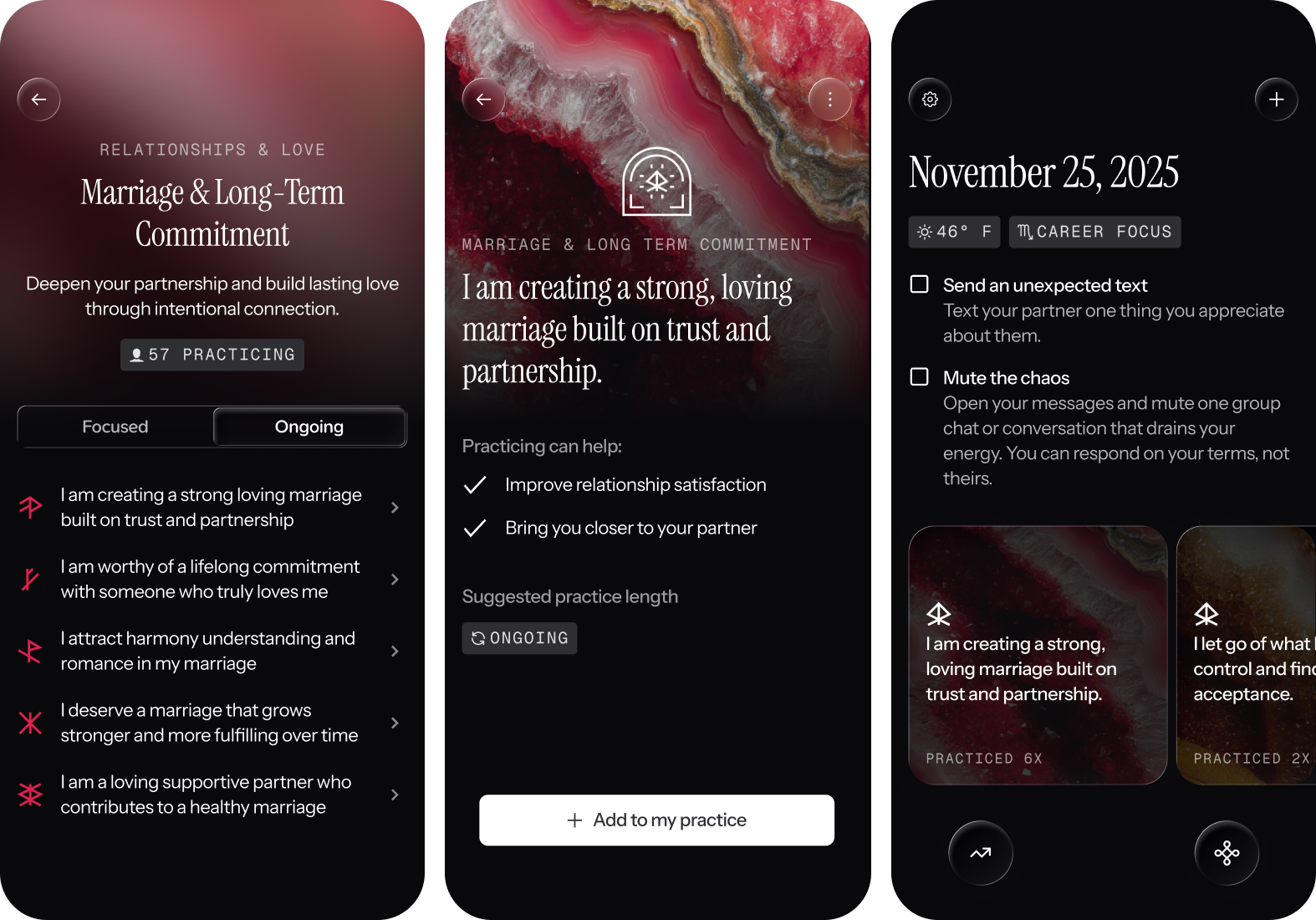
You build your practice from a curated library of affirmations, organized by category and topic, and you can hold up to three active at a time. Every affirmation carries a set of real tasks sized by effort - small ones under five minutes, medium ones, and larger commitments - plus mindset exercises for reflecting, showing gratitude, and imagining. The whole thing is designed so the next step is always small enough to take.
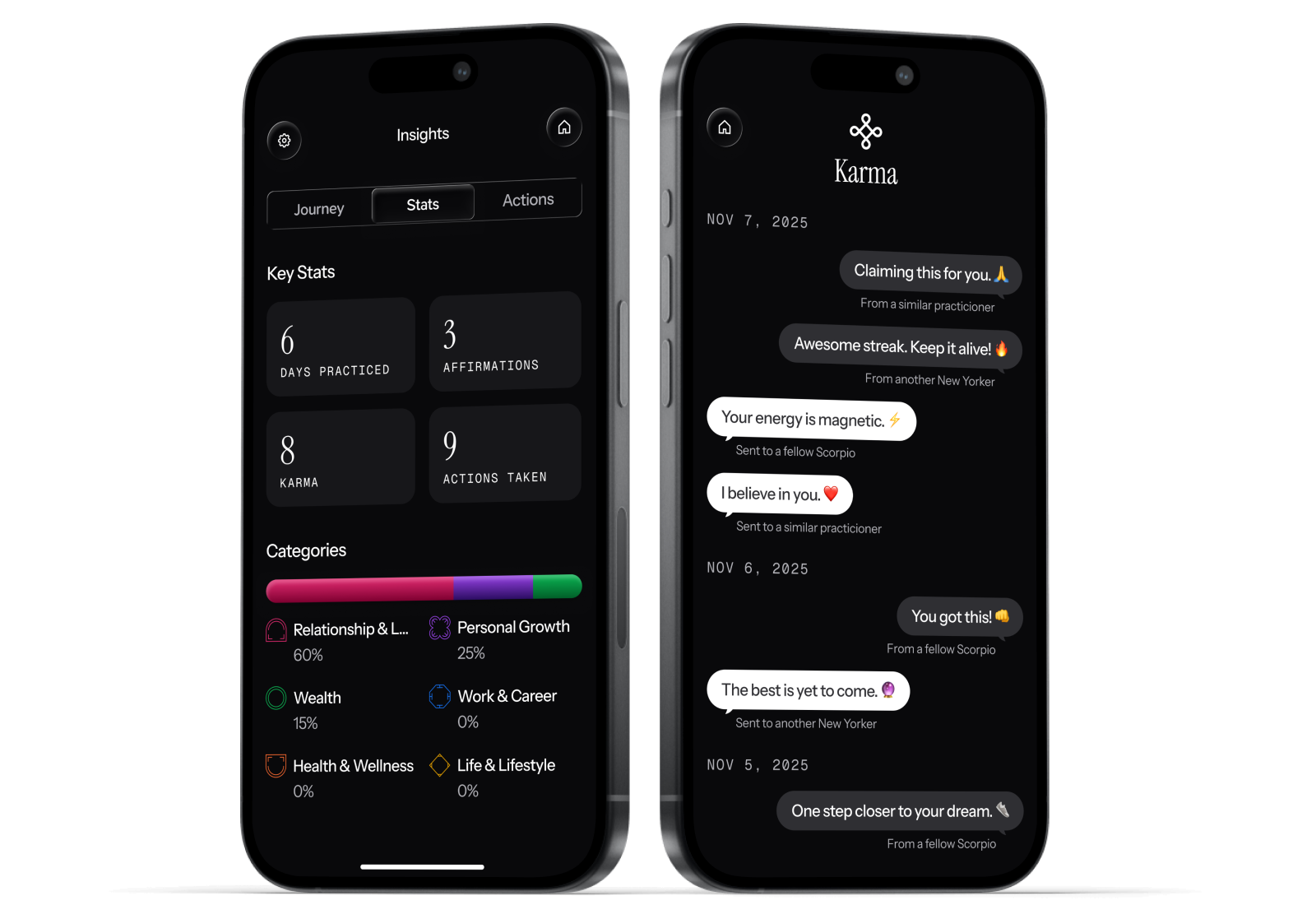
The two pieces I'm proudest of are Karma and the rune system. Karma is the optional last step of a practice, where you send a short, anonymous note of encouragement to another user. Not someone you know - a fellow New Yorker, a fellow Scorpio, someone working on the same kind of thing. The rune system is a visual identity that gives every affirmation its own unique mark built from three nested layers of geometry: the outer ring is the category, the middle is the topic, the inner is the affirmation. With six categories, six topics each, and twelve affirmations under those, it produces 432 distinct runes - a small collectible identity for your practice.
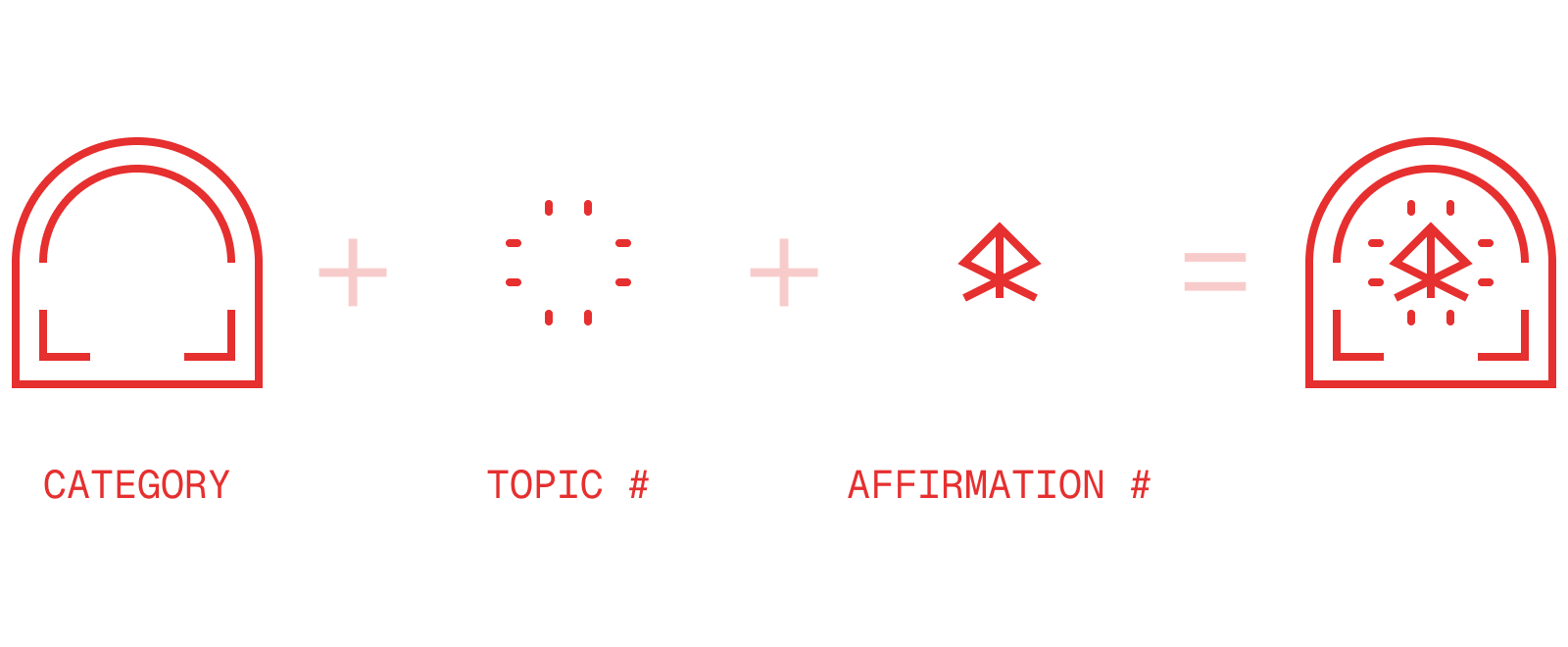
Underlying thesis
Eos is a bet on one gap. We studied a couple dozen apps across manifestation, vision boards, and meditation before building anything, and every one of them treated the practice as visualization and stopped there. None of them answered "then what?" People would write down what they wanted, feel good for a minute, and have no idea what to do next. Bridging visualization to action is the single largest unmet need in the category, and Eos is built entirely around closing it. The promise isn't a nicer vision board. It's that the app tells you what to actually do today.
Strategic decisions
- Pre-generate the content, don't generate it per user. It would have been easy to lean on AI to spin up tasks and exercises live for each person. We pre-generated the whole library instead - every affirmation's tasks, exercises, and benefits written and stored ahead of time. That removes per-user cost and latency, and more importantly it means we can actually QA the content. A manifestation app that occasionally hands someone a strange or unhelpful AI-generated step erodes the exact trust it depends on.
- One tier, no free version. We collapsed an early Basic-versus-Pro split into a single tier where everyone gets everything. It kills the "what am I missing?" decision fatigue, and it fits the positioning: this is for people serious about results, not a freemium funnel.
- Cap the daily practice at three affirmations. Competitors let you pile on dozens, and people drown in them. Holding the practice to three enforces depth over breadth and protects against the overwhelm that kills consistency in this category.
- Karma in the MVP, not after it. Community is usually the thing you promise for "later." We pulled Karma into the first version and made it a core differentiator, because the discovery work kept pointing at connection as the thing the whole category was missing.
Learnings
The most useful thing Eos taught me came out of the research, and it's the reason Karma exists. Manifestation looks like a solo practice, but the discovery work kept telling us the hardest part of any practice is feeling alone in it. The big communities around it, the Reddit threads and Facebook groups, back this up. Karma was our quietest answer to that: not a social feed, not followers, just a small anonymous note from a stranger working on something like what you're working on. It's a feature I've thought about a lot since, on every product I've designed after it.
Download Eos on the App Store.


