
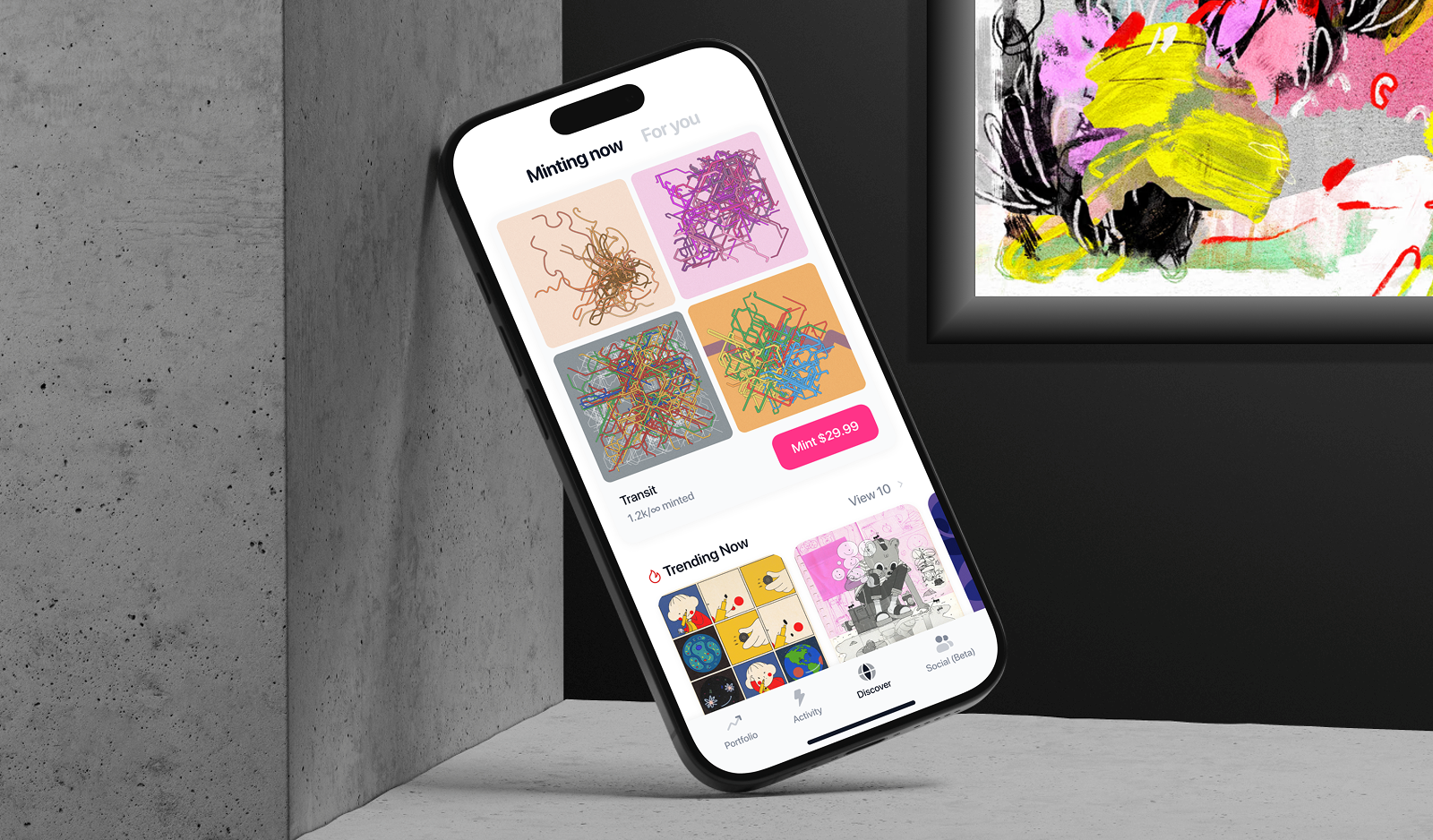
"Mobile Mints" was the term we coined at Floor for buying an NFT inside the app with Apple Pay instead of native crypto. I was the founding designer from 2022 to 2024, and this was the work I'm proudest of from those years. Before Mobile Mints, buying an NFT meant setting up a wallet, funding it with ETH from somewhere else, then finding a marketplace like OpenSea to make the purchase. A lot of friction, and a lot of places for a newcomer to get lost. We wanted Floor to be the friendliest app in web3, and friendly here meant you could collect your first NFT without ever buying crypto.
Custom skins
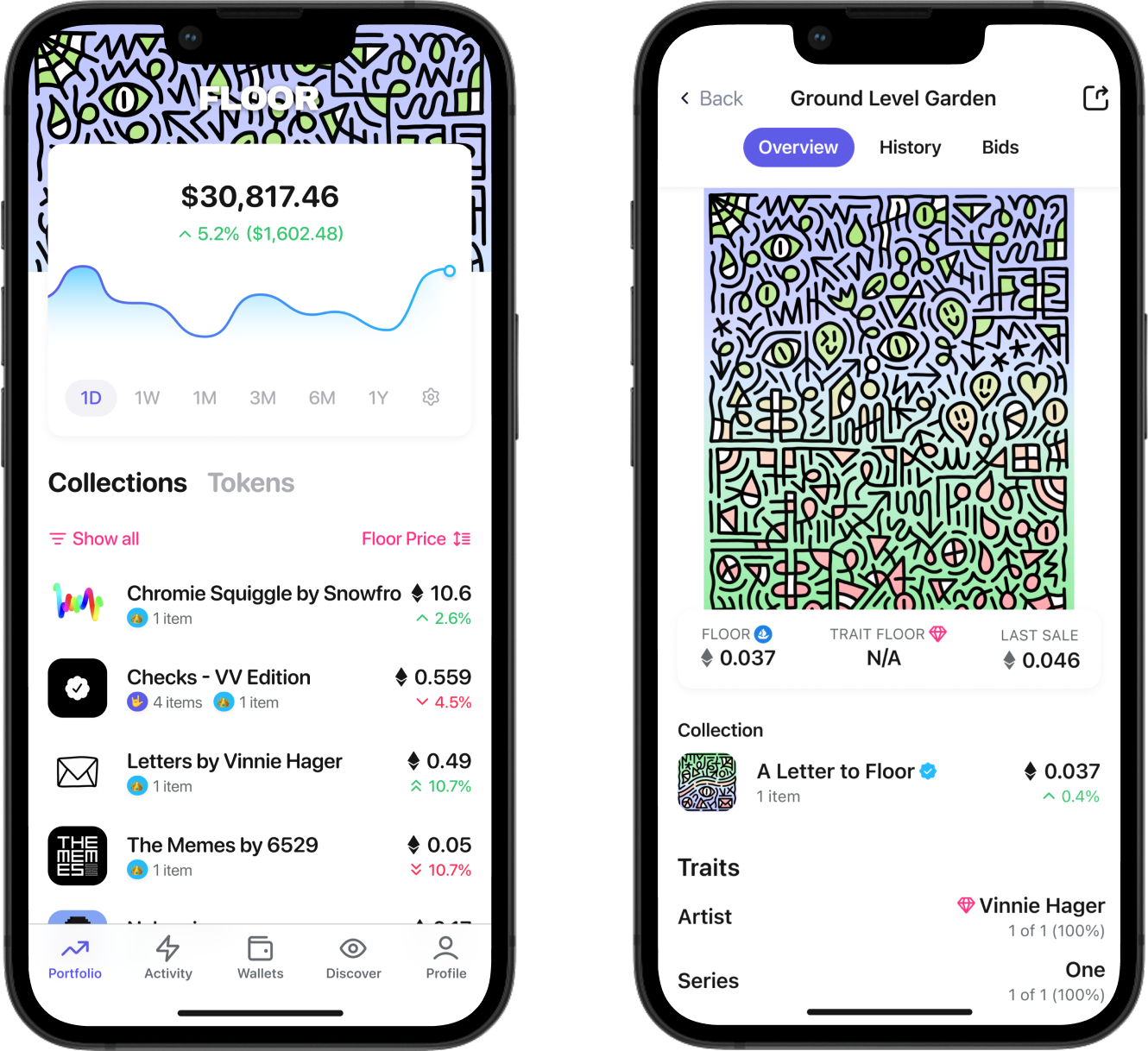
We wanted owning one of these NFTs to change the app itself, so the first thing to figure out was what could be customized. We started by loading in preset versions. We used a purple color for the beta. We had some fun with "ngmi" - not going to make it - and flipped the Floor logo to point down instead of up, in red. Users could customize their portfolio banner and their app icon.
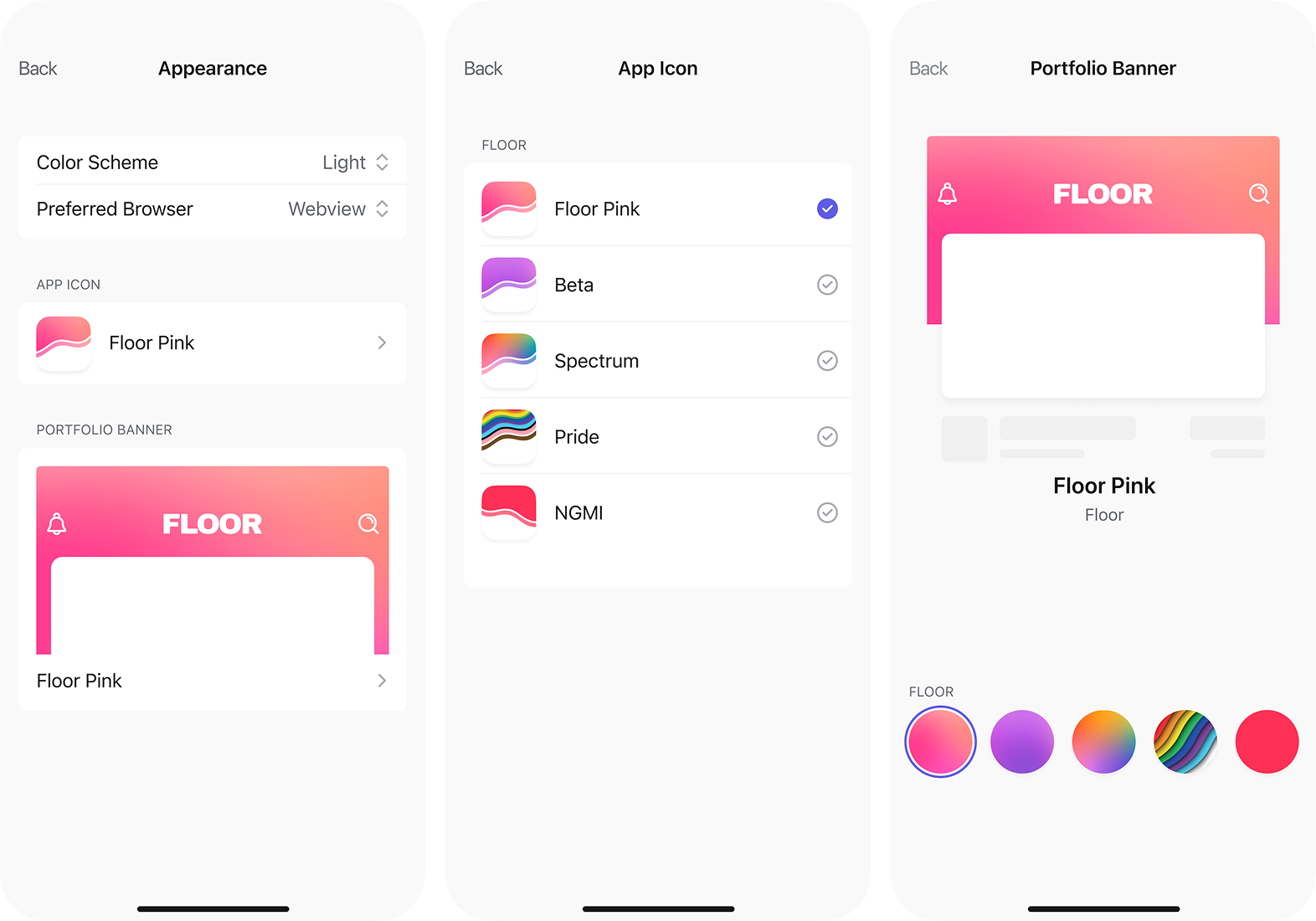
It worked, but most people had no idea what was coming beyond that, or why it mattered to us.
Icons
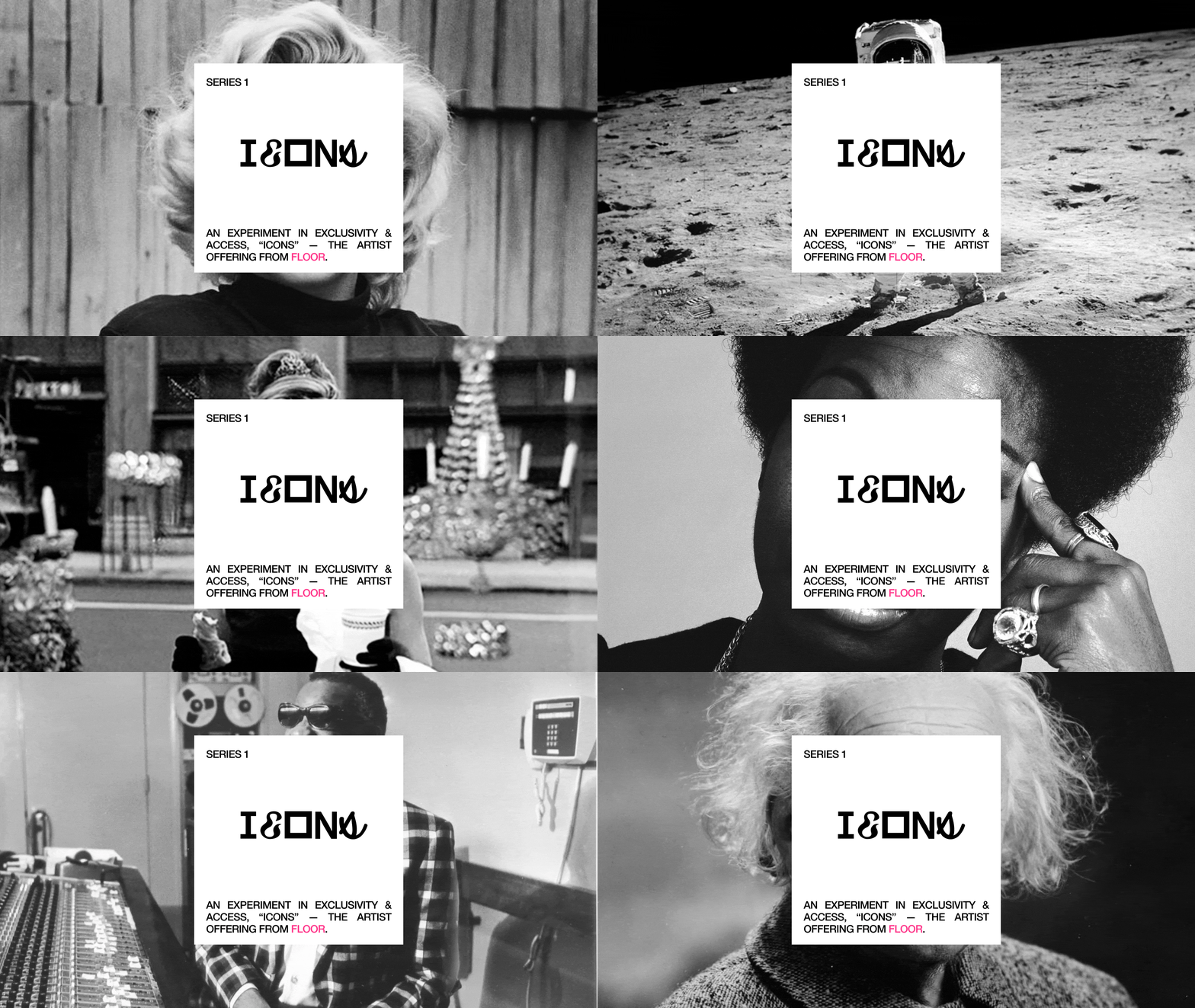
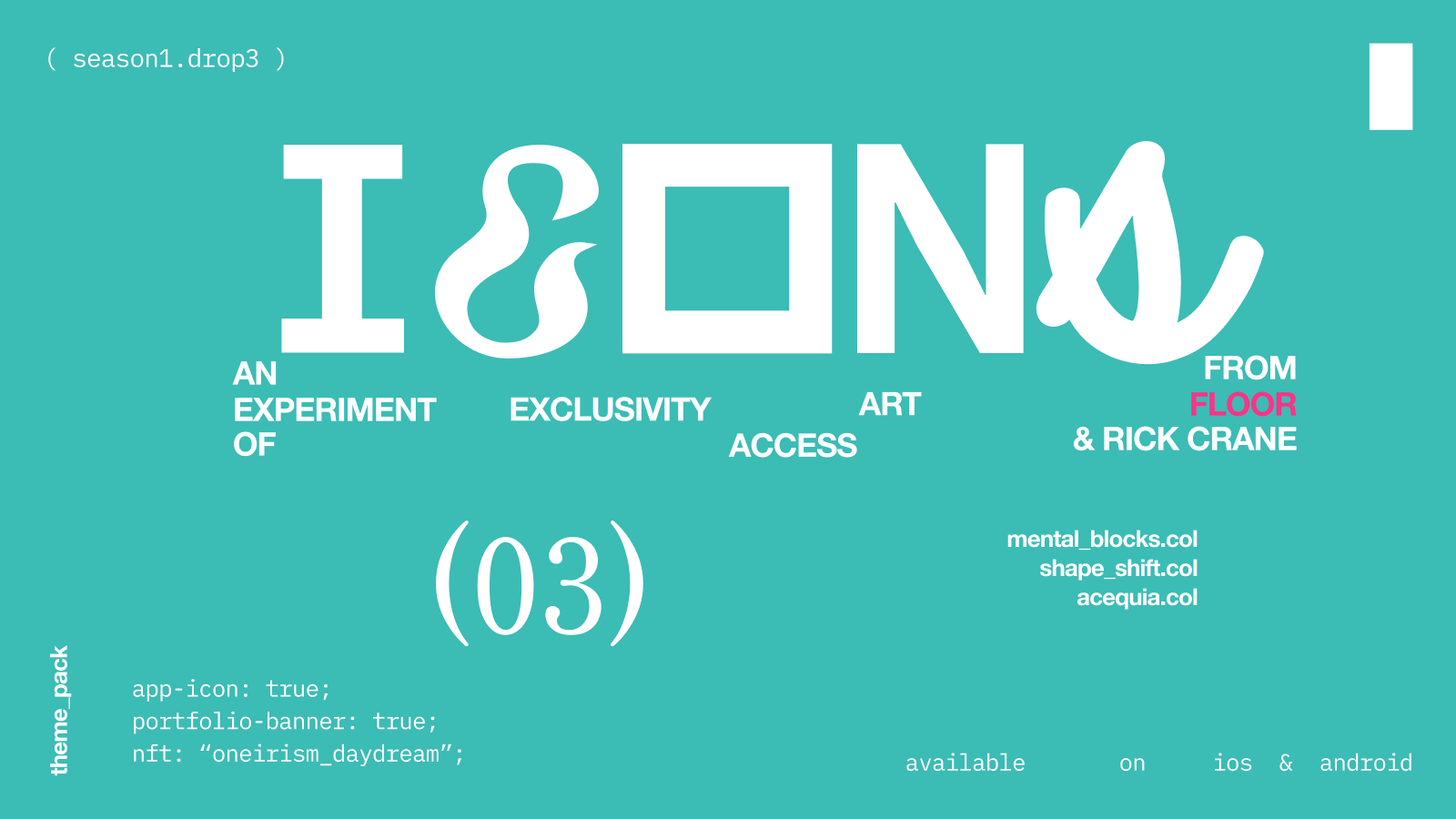
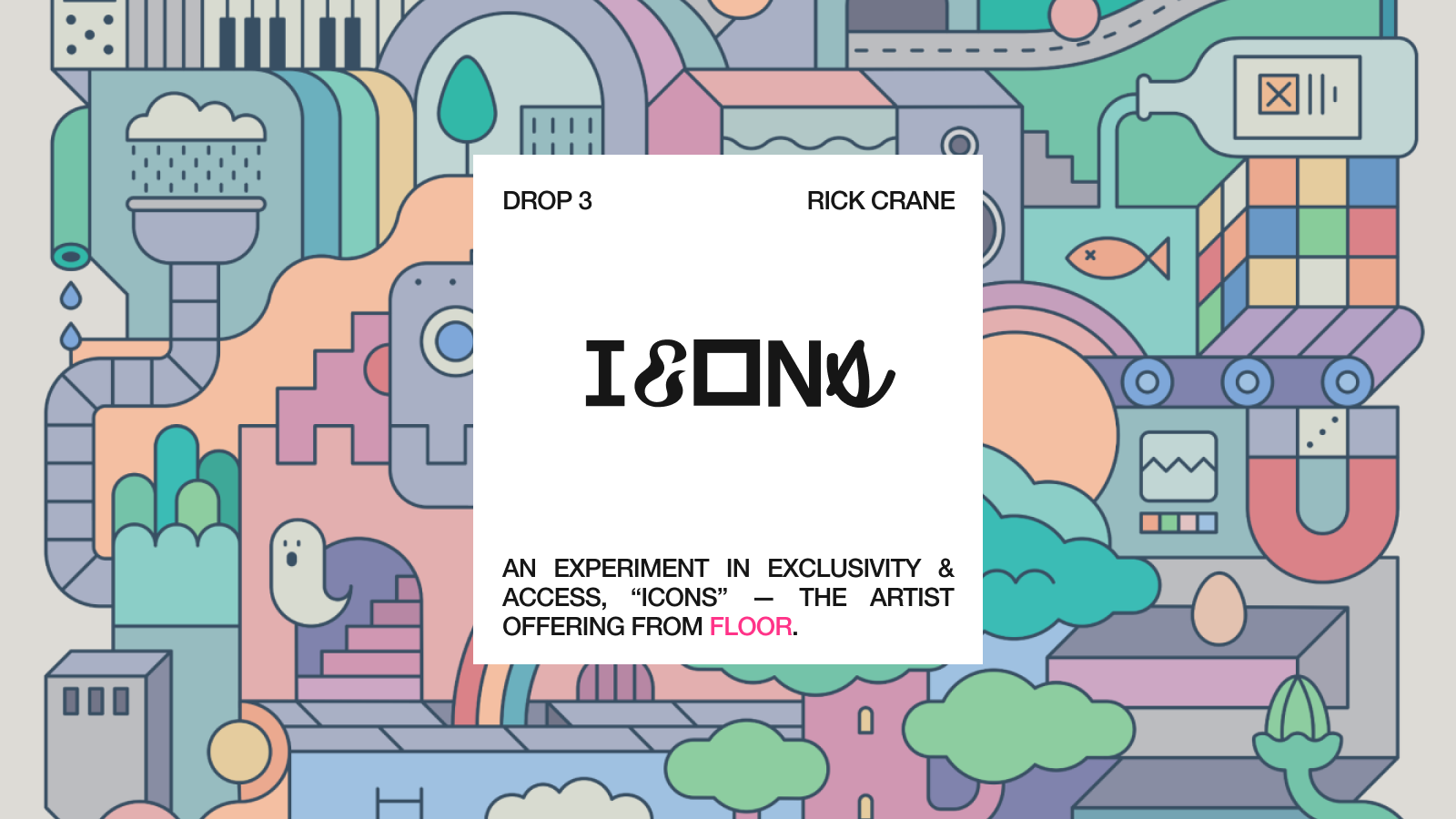
The way we tested the idea was to partner with ten web3 artists. Each created a unique NFT that could only be minted inside Floor, along with the custom skins that would change the app's UI for anyone who owned it. Our first artist was Vinnie Hager, a popular NFT artist. For ten weeks, an artist would have a unique drop inside the app. We sent push notifications, did a lot of marketing, and had fun letting the Icons brand be a slight departure from Floor's - a square frame became the core visual rule, and you can see that across the in-app work and the marketing materials.
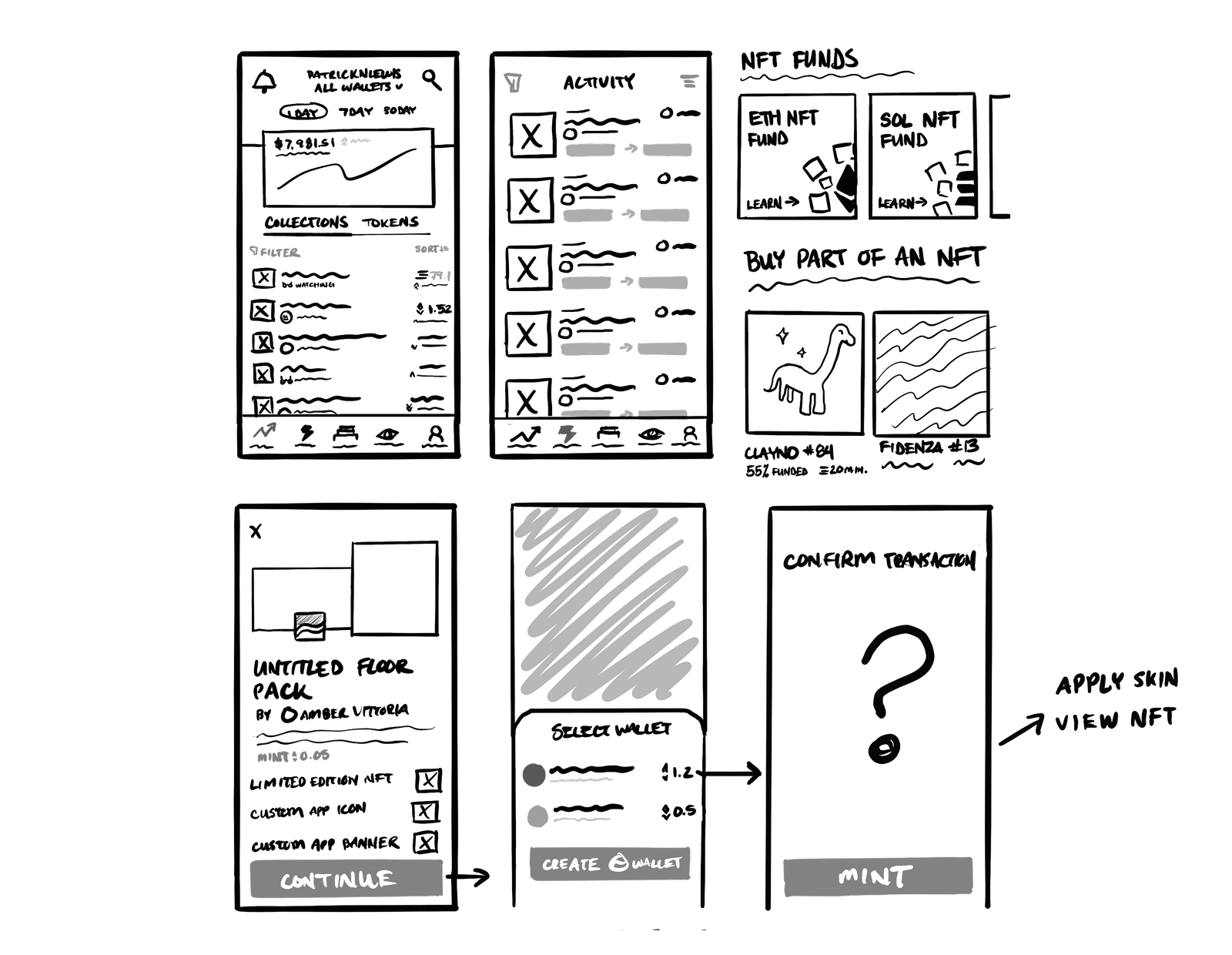
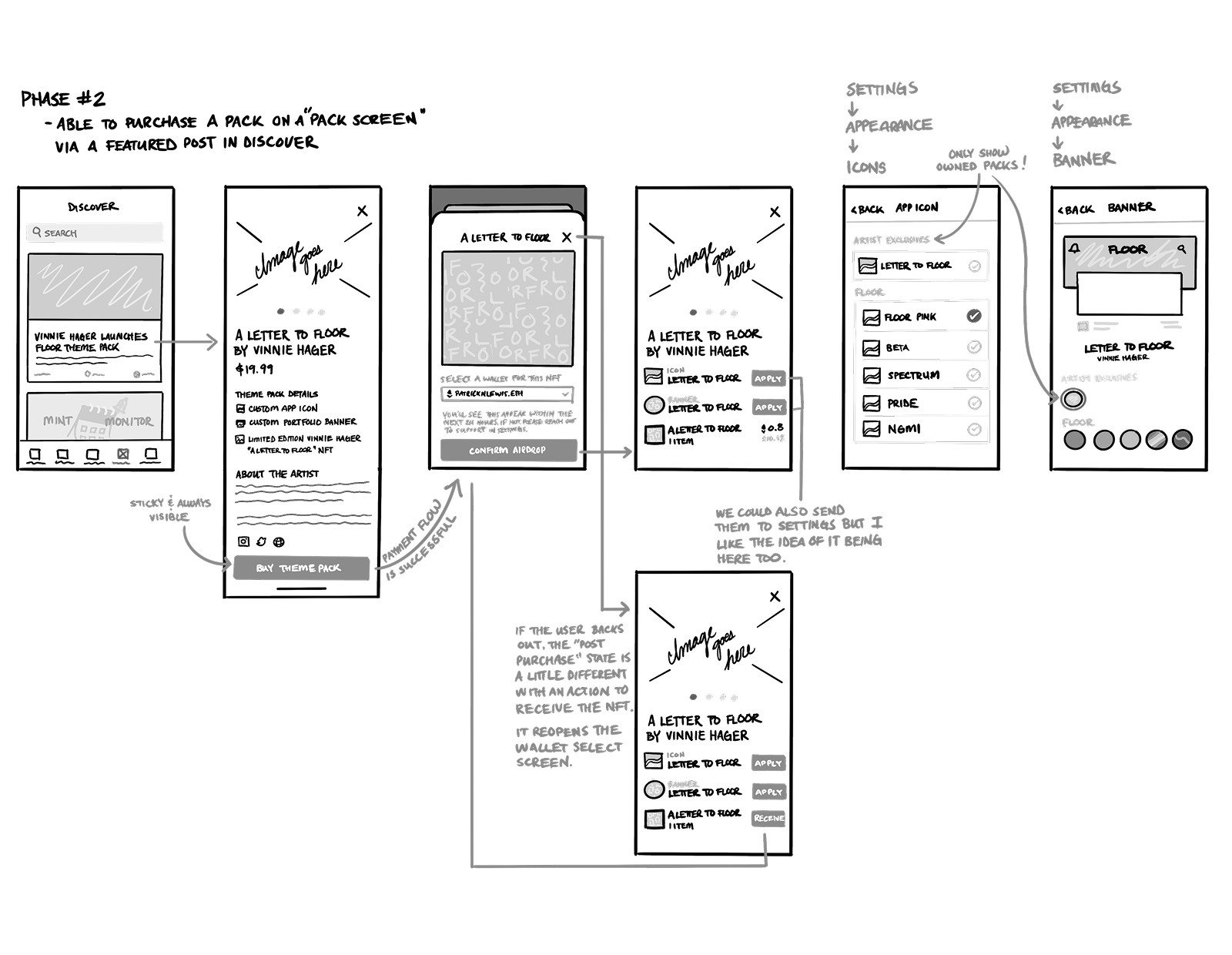
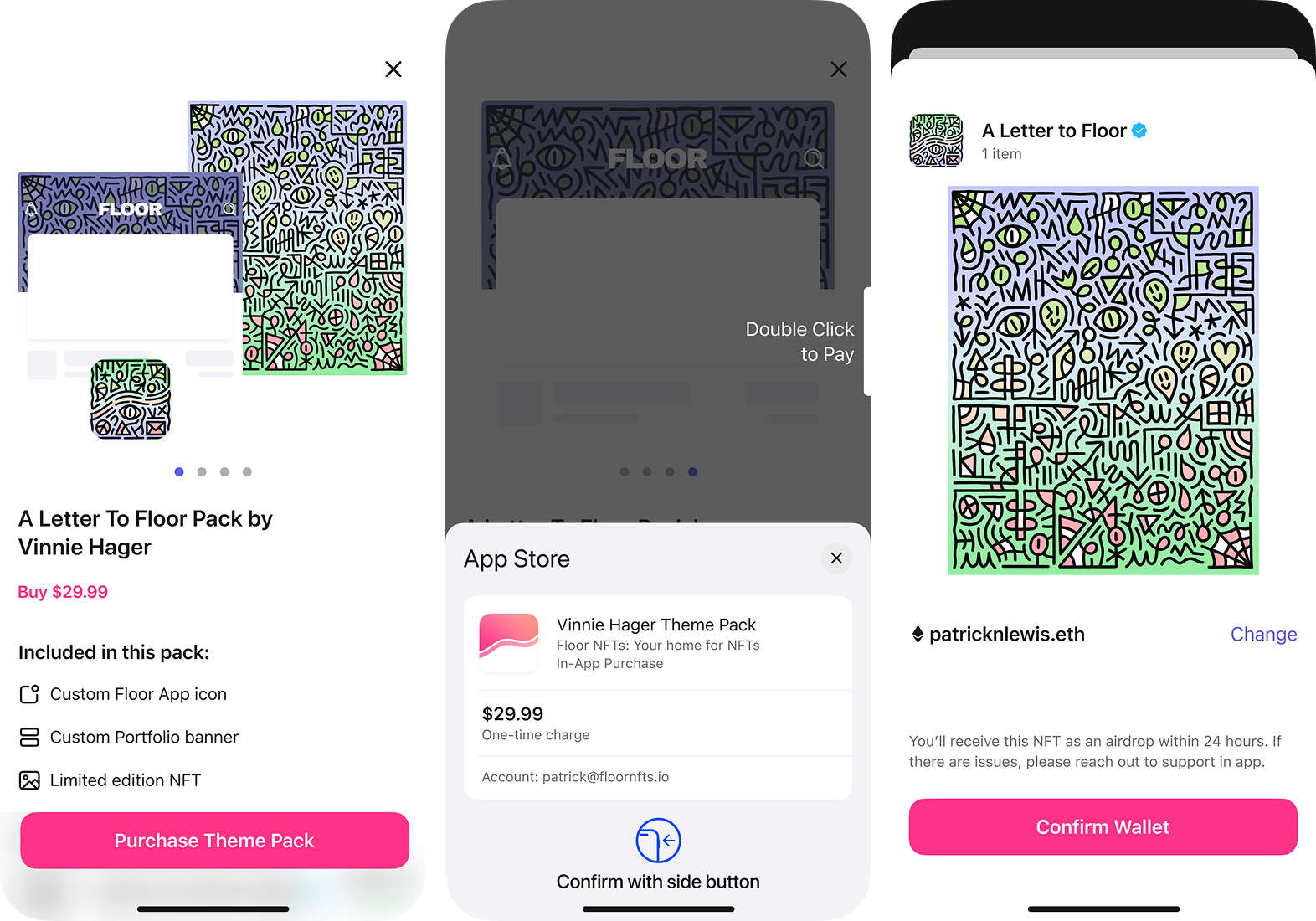
This was the first time you could buy or mint something inside Floor, and it was an industry first to be able to purchase an NFT using Apple Pay or Google Pay. The space and the purchase type were both new, so to make it approachable the flow had to feel familiar and trusted. We followed a traditional in-app purchase flow: we showed off exactly what you were buying, and as long as you had a wallet, you'd confirm where you wanted to sync to and it would deploy from Floor.
Discover
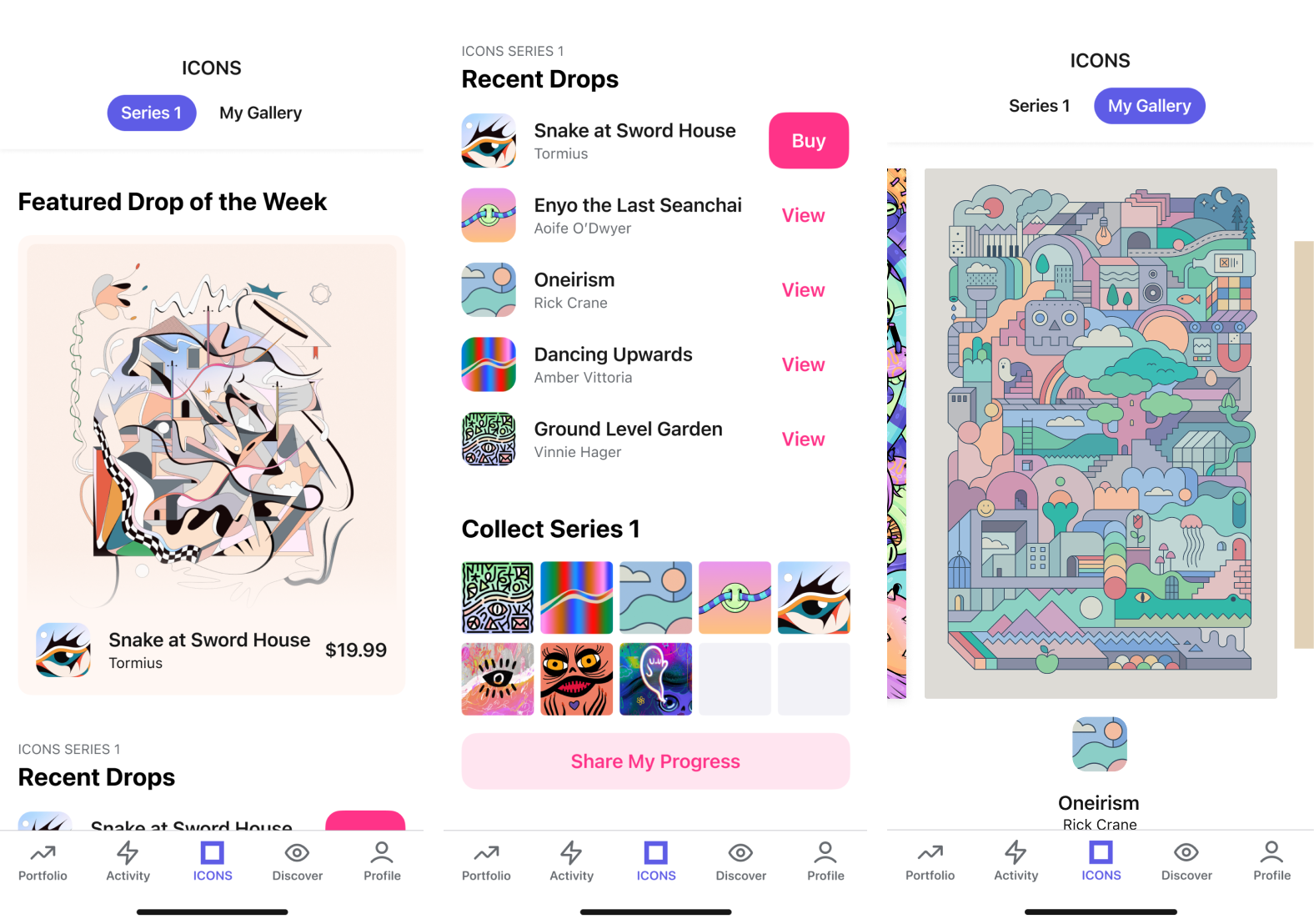
As Icons gained momentum, we gave it its own tab. That gave us real estate to promote new drops, show off previous ones, and highlight the people who'd collected all of them.
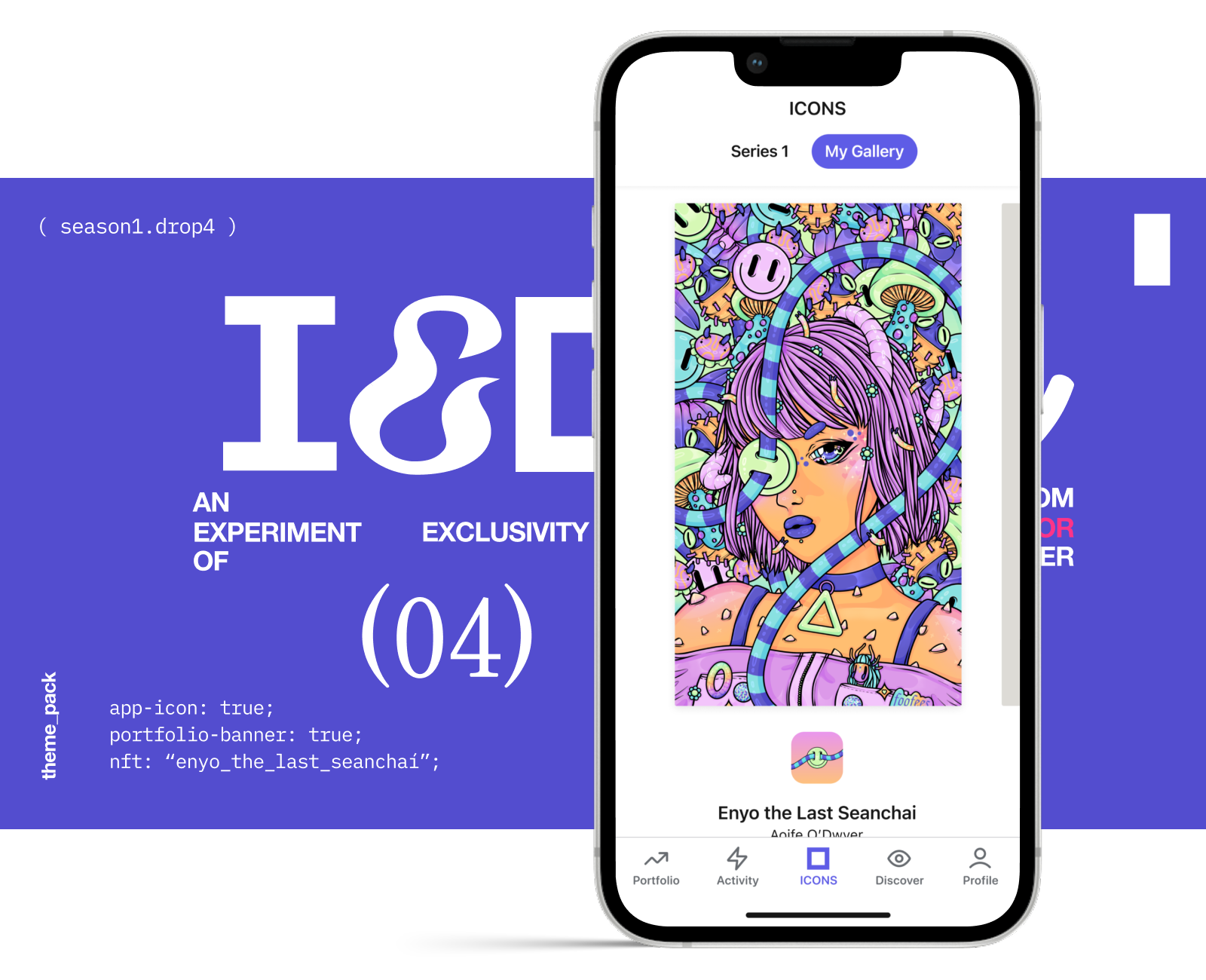
Our users were collectors. Look back at who they were and you'd find people who collected sports cards, Pokemon cards, badges, pins. A dedicated space was a way for them to show off their commitment to Floor and Icons, and just to show off their collection.
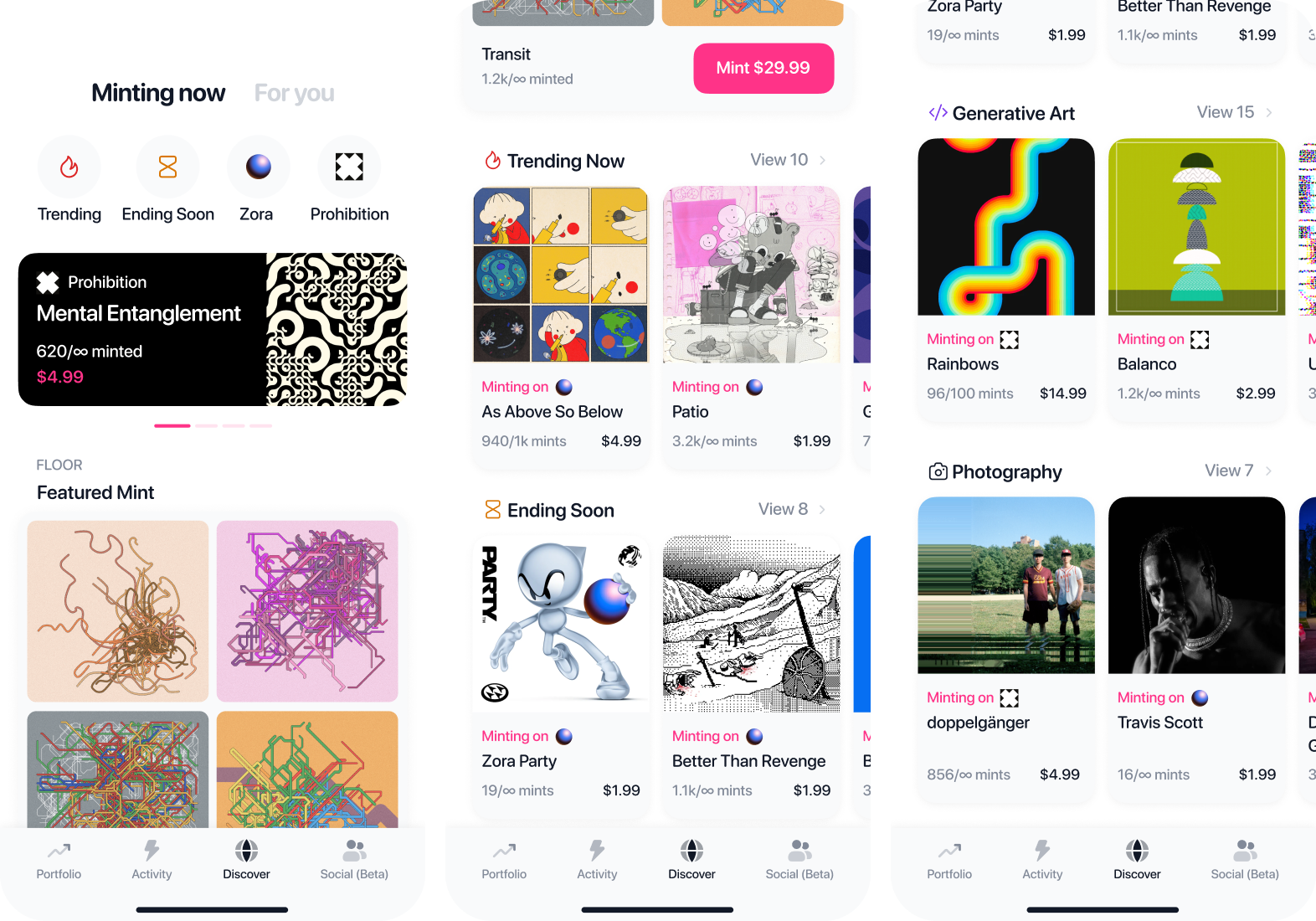
Over time, that tab became our Discover tab. We partnered with marketplaces like Prohibition, Zora, and Coinbase to offer lots of different NFTs across a variety of chains, all mintable inside the app using fiat. Generative art got revealed inside the app. Artists started promoting Floor as an easier way to get their work out. What began as "minting without native crypto" turned into a genuine discovery surface for web3.
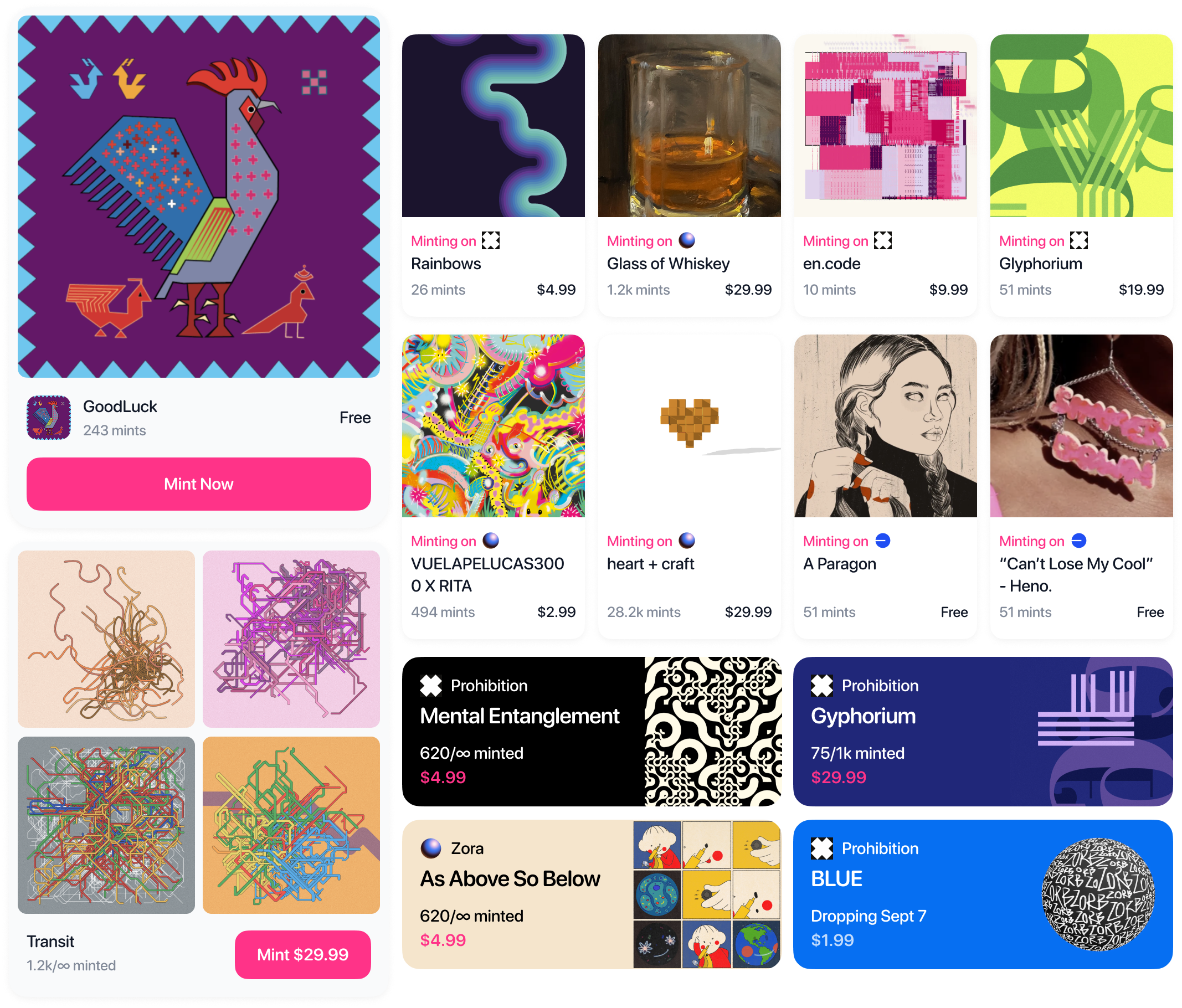
Minting platform
The final evolution was Floor as a minting platform. My personal highlight, as a lifelong Pokemon fan, was designing a Pokemon pack wrapper for our partnership with Courtyard. You could use crypto, or in this case Apple Pay, to buy a Pokemon card on chain. It would be revealed to you, and you could sell it, keep it in a vault, or have it mailed to your house.
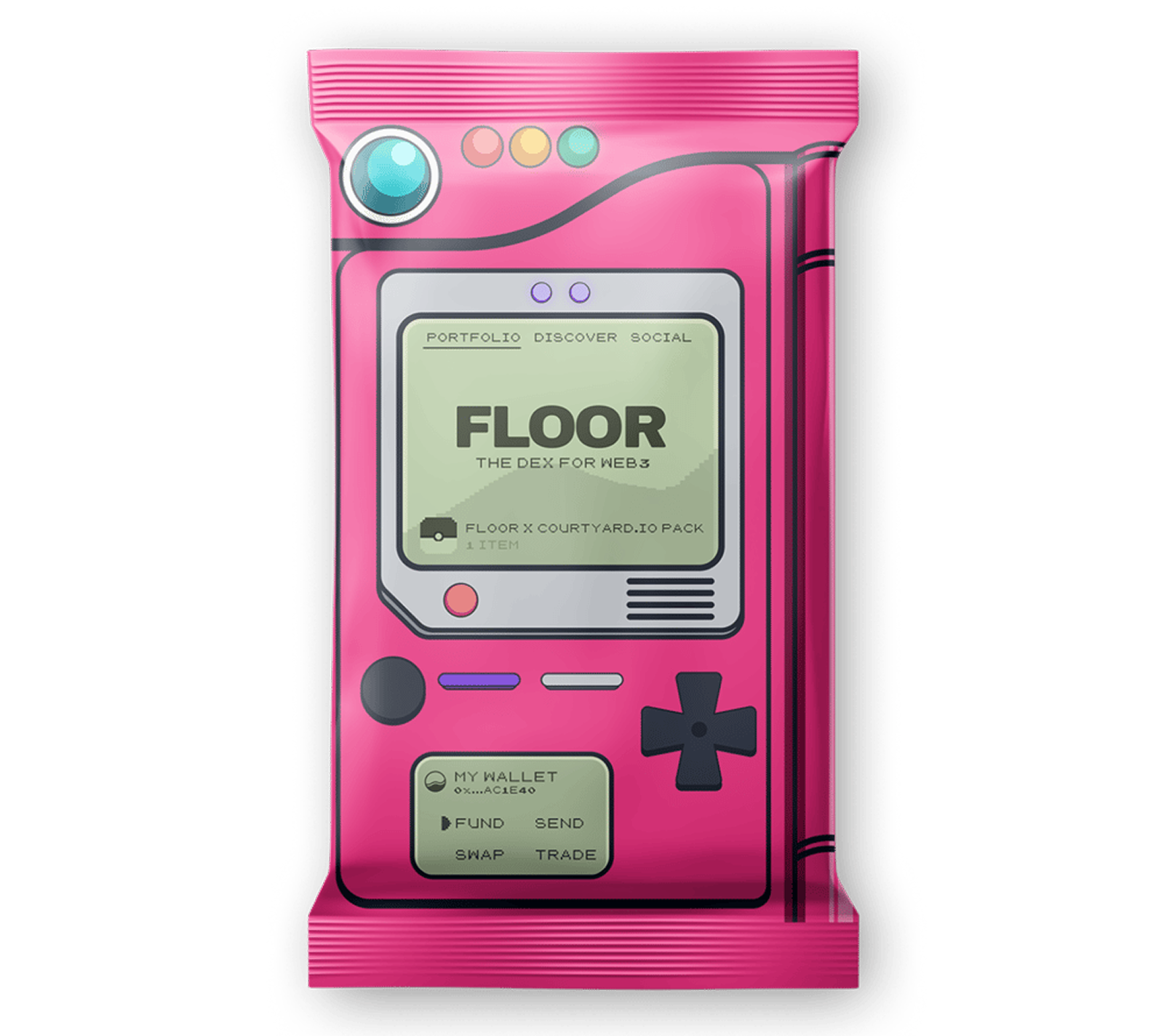
I had some fun with the framing. If you know the Pokemon lore, Floor is kind of the Pokedex for web3: it gives you a way to discover things, understand what you're discovering, and tells you some of the backstory. We leaned into that as the visual.
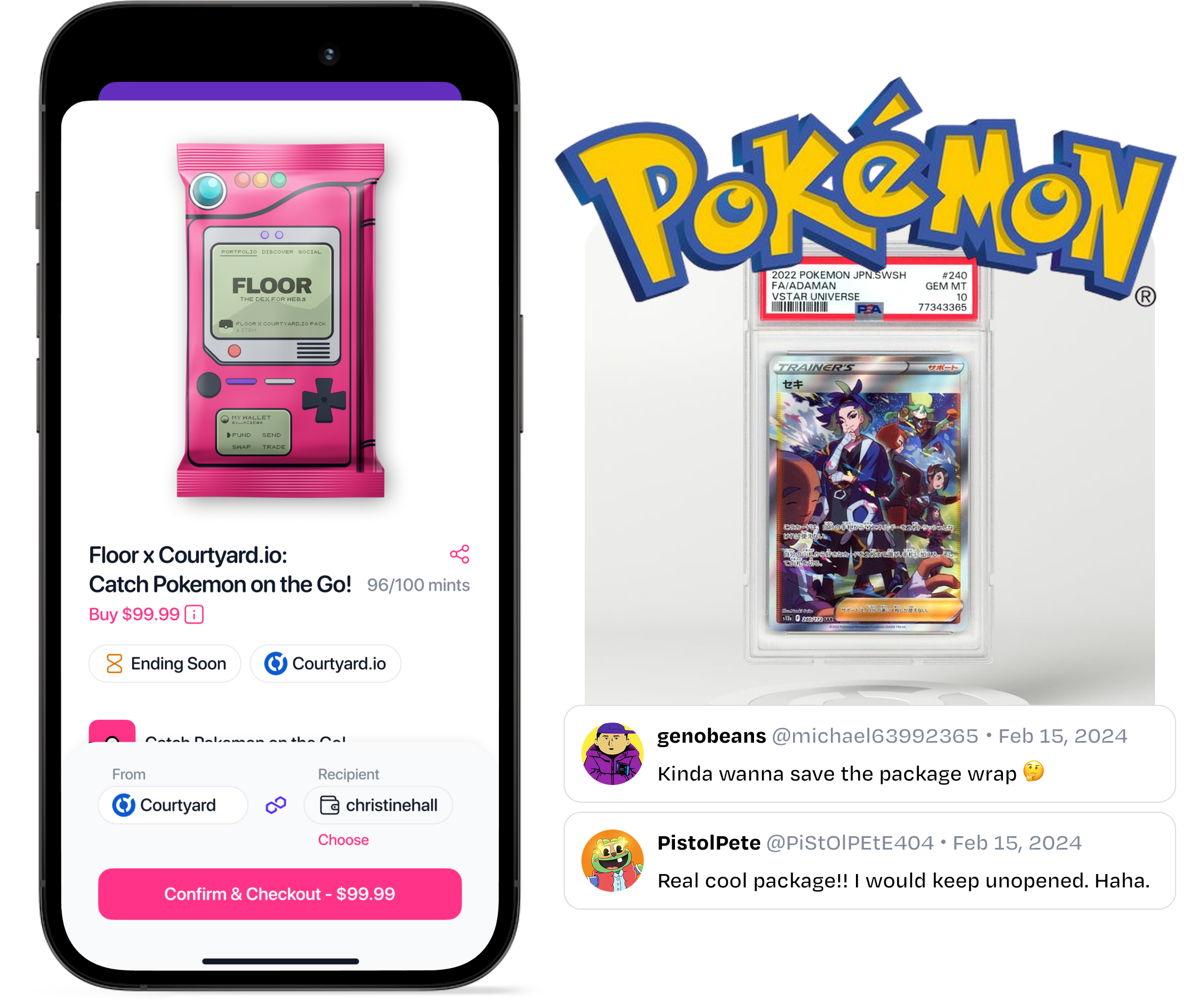
We sold over $10,000 worth of Pokemon cards in under a minute. A massive success. I can't take all the credit - Pokemon is a very strong brand - but it was nice to get comments from people who wanted to keep the packaging.
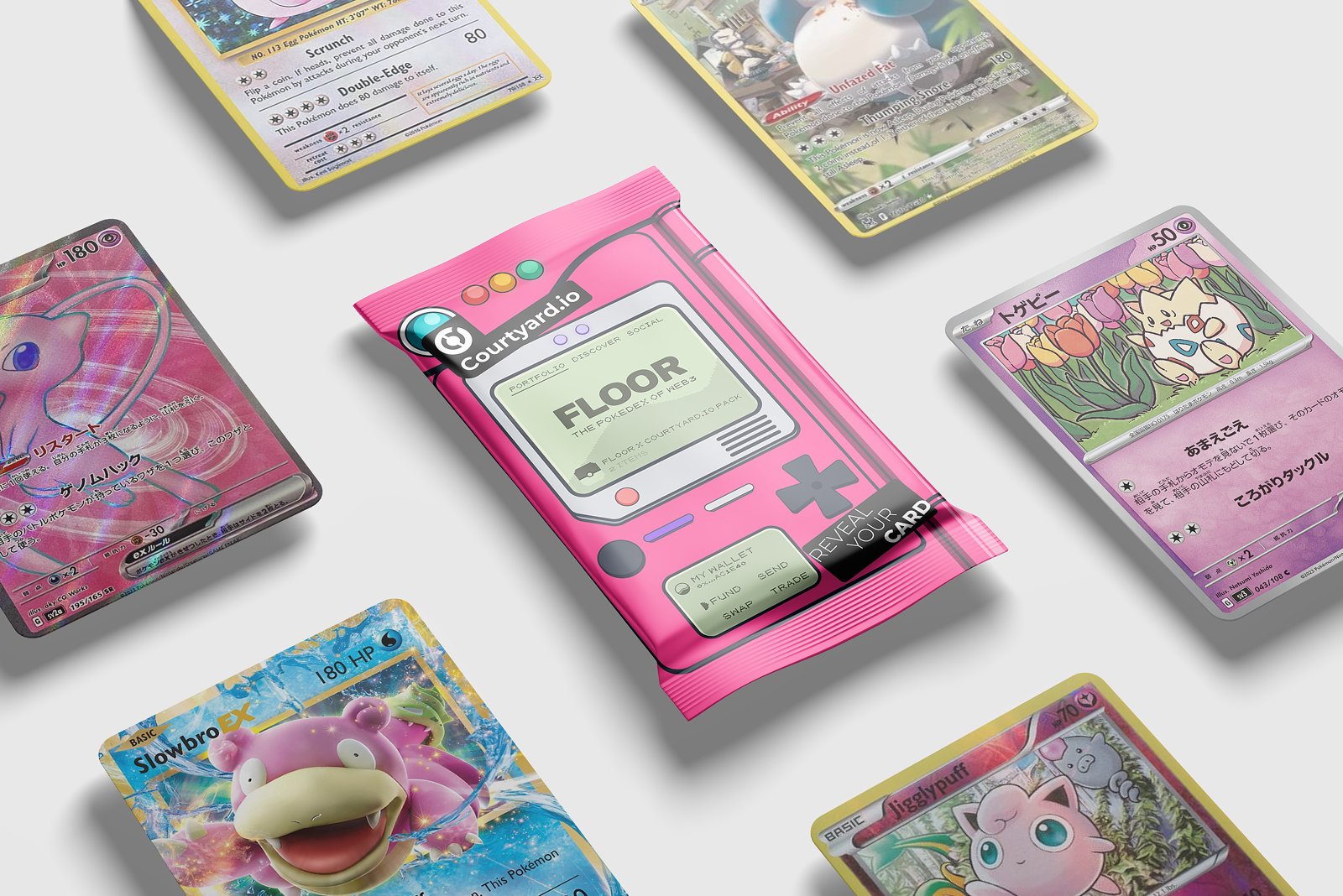
Mobile Mints started from one simple idea: minting without the need for native crypto. It grew into Icons, then into Discover, then into Floor as a full minting platform, and it generated a lot of in-app revenue along the way. It made the space accessible to a kind of person who'd never have made it through the old funnel. It was a big part of why Floor was an attractive acquisition to OpenSea.
