
Quartermaster is task management and team visibility for small software teams, built to live inside the AI coding tools they already use. It started because Josh and I got tired of paying for Linear, but the real reason it exists is that AI work is heavily single-player: the person doing it lives in a terminal, and pulling anyone else into the loop is genuinely hard. Quartermaster connects as a Remote MCP server, so a builder can stay aware of what the team is doing without leaving their editor, and anyone they're working with can stay current without having to live in there with them. I handled product and design. I wrote a healthy share of the web app, too.
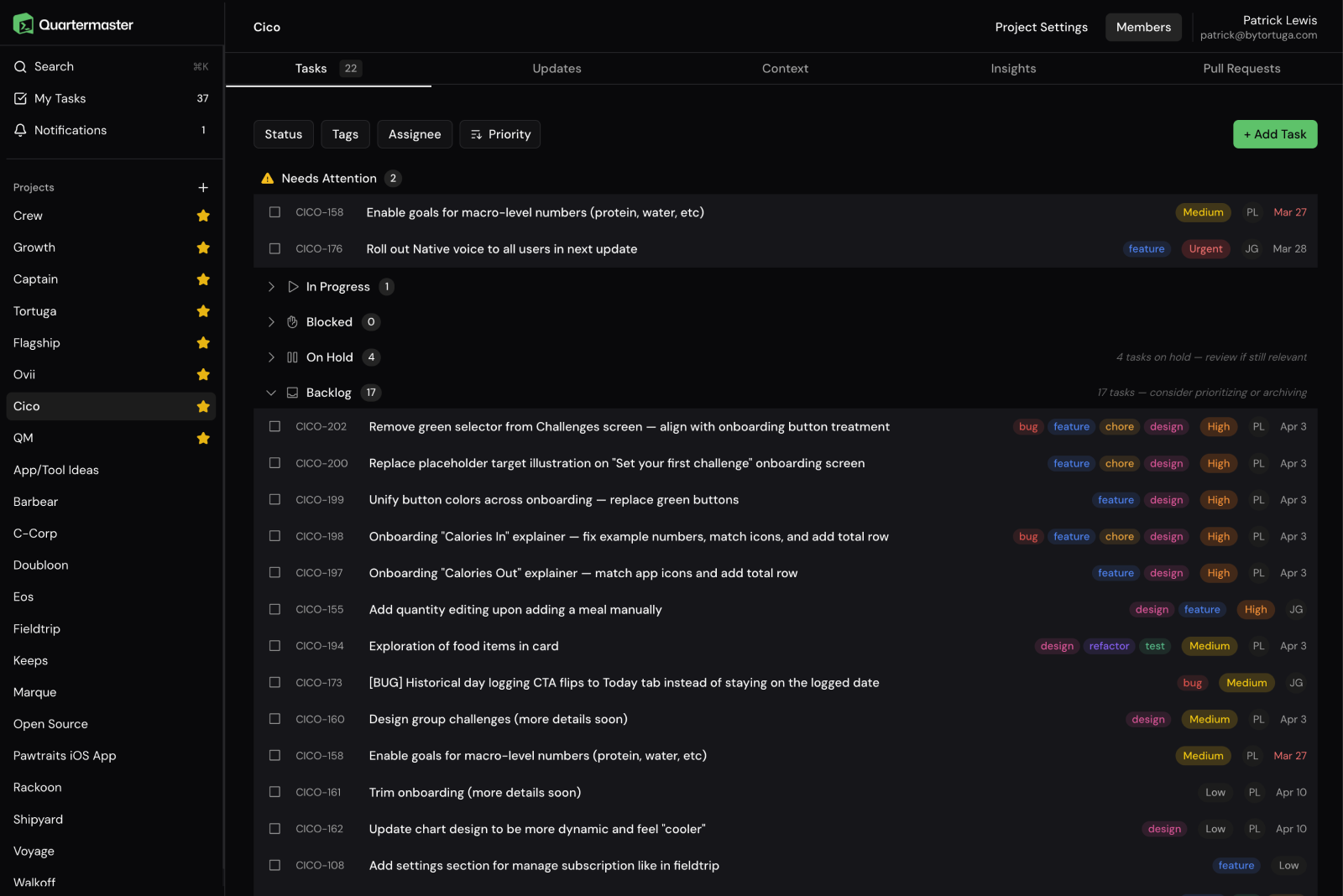
Features
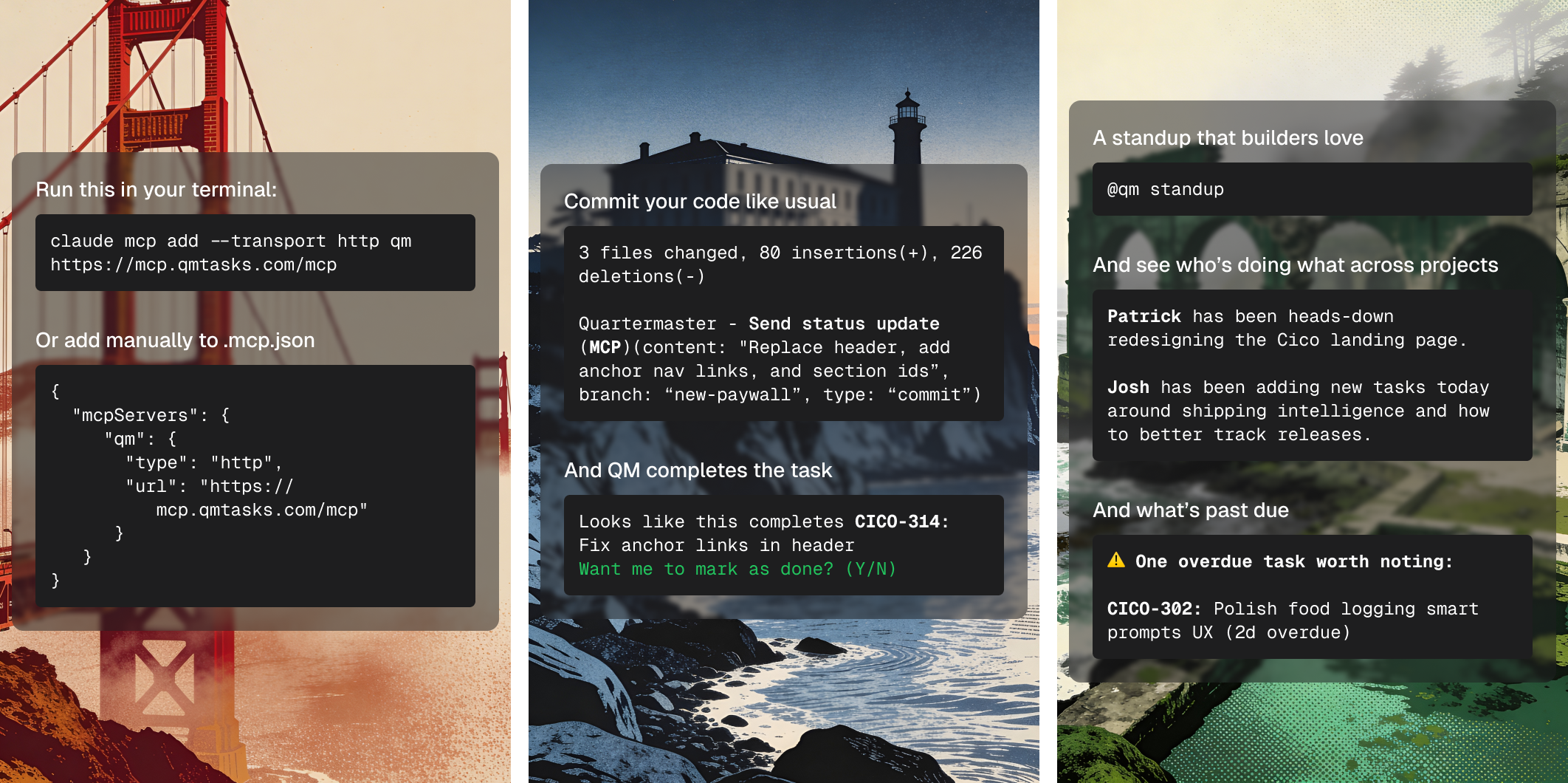
You add Quartermaster as an MCP connection in Claude Code, Cursor, or Codex, set your active project, and from then on you talk to it in plain language - "@qm what's left?" - and it answers inside the editor. When you commit, that commit becomes a team update automatically, captured through a tool call rather than logged by hand. You can pull typed context on demand too: the design, the requirements, the user feedback tied to what you're building, surfaced when you ask for it instead of hunting across Slack, Docs, and Figma.
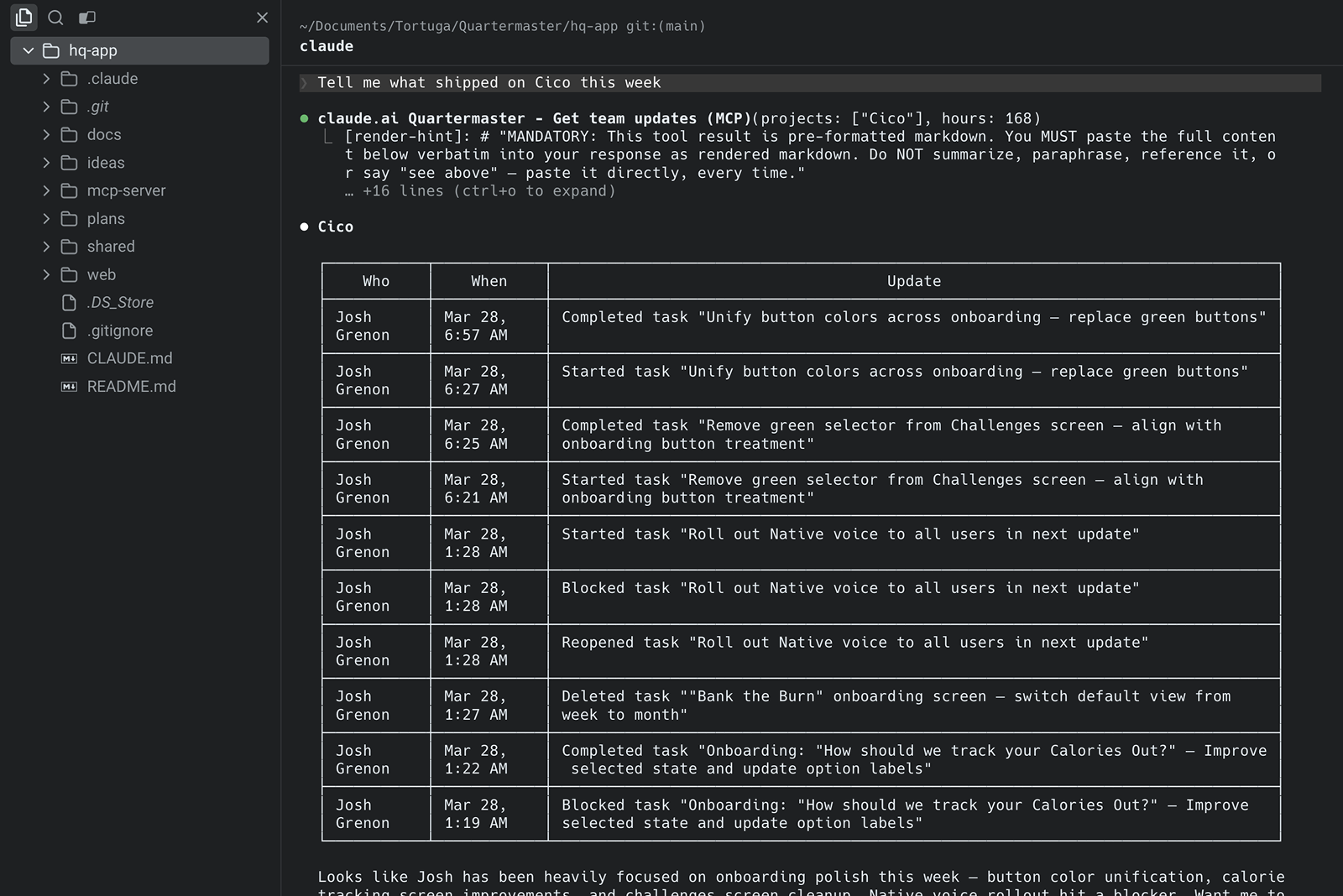
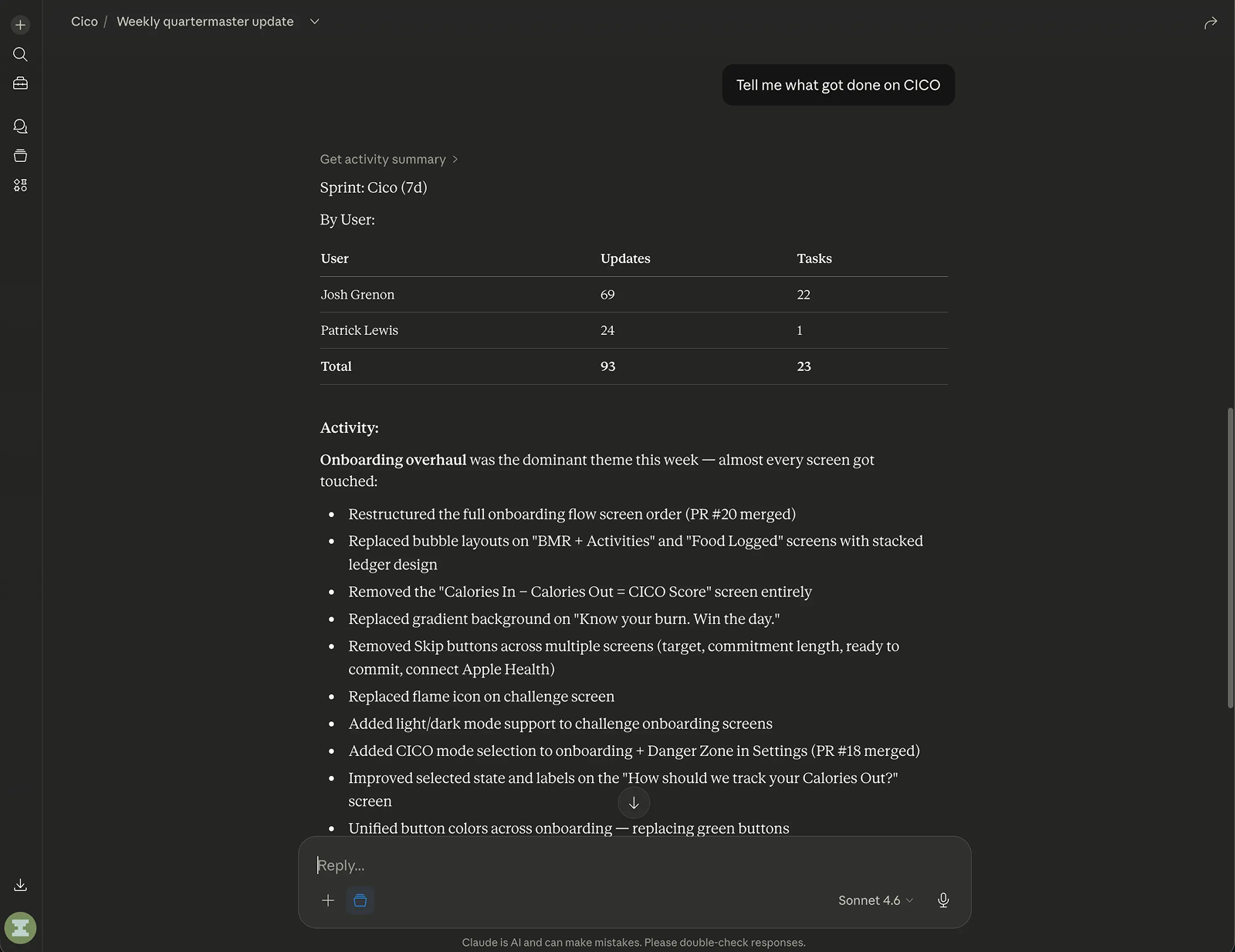
The other half is the web app, where product and design can add context, files, and links, create tasks, and watch a project activity feed. That's the part that matters for a small team: the people who aren't in the editor can push context to the people who are, and see what shipped, without anyone living in a separate tool. It's dark and terminal-native, because that's where its users already are.
Underlying thesis
AI coding tools made individuals much faster and teams no more visible to each other. Work happens in isolation, and teammates have no window into what's being built until it ships. At the same time, the work is already captured in commits and PRs, so traditional project management mostly asks you to log it a second time, which is how trackers fill up with stale data. And the context a builder needs - decisions, designs, feedback - lives everywhere except where the building happens.
Quartermaster's bet is that the AI tool already knows what you're working on. That signal is enough to make visibility a byproduct of building rather than a second job, and to give non-code context somewhere to flow in.
Strategic decisions
- An MCP server, not another app. The whole point is to meet builders where they already are. Asking them to open and maintain a separate tracker would recreate the exact problem we were trying to remove, so visibility had to come from inside the editor.
- On-demand, not notifications. Context is pulled when a builder asks for it, never pushed. We left push notifications out on purpose - the failure mode of every team tool is becoming one more noisy, ephemeral feed, and we'd rather be quiet and queryable than loud.
- Flat rate, not per seat. One price for the whole team, free for teams up to five. Per-seat pricing taxes you for adding the exact people whose visibility is the point; flat pricing gets out of the way of that.
- Commits, not code. Quartermaster receives commit messages and metadata - hash, branch, timestamp - and never source code or file contents, and it doesn't train on any of it. For the skeptical builder we were selling to, what you don't take is the trust signal that matters.
Learnings
The most useful thing we changed was taking automation out. An early version was clever about it: it auto-detected the project from the repo, fuzzy-matched commits to tasks, and closed tasks on its own. It sounds good written down, and in practice the guessing was worse than just asking. We pulled it back so the builder sets the active project for the session and confirms a task is done after a commit. The explicit, confirmed version is less impressive and more trustworthy, and trust is the whole job for a tool that quietly tracks your work.
The other one is simpler: we built Quartermaster for ourselves first and held it to one bar, "would we pay for this if we weren't building it." Dogfooding it across every Tortuga project is what kept the workflow honest, and it was the tool we reached for on everything we shipped.
Sunset
We sunset Quartermaster on October 1, 2026, as Josh and I turn our focus toward consumer apps. It started because the two of us got tired of paying for Linear, and for a while it ran every project we shipped. The lesson about choosing the explicit, trusted version over the clever one is the part I'll keep using.


